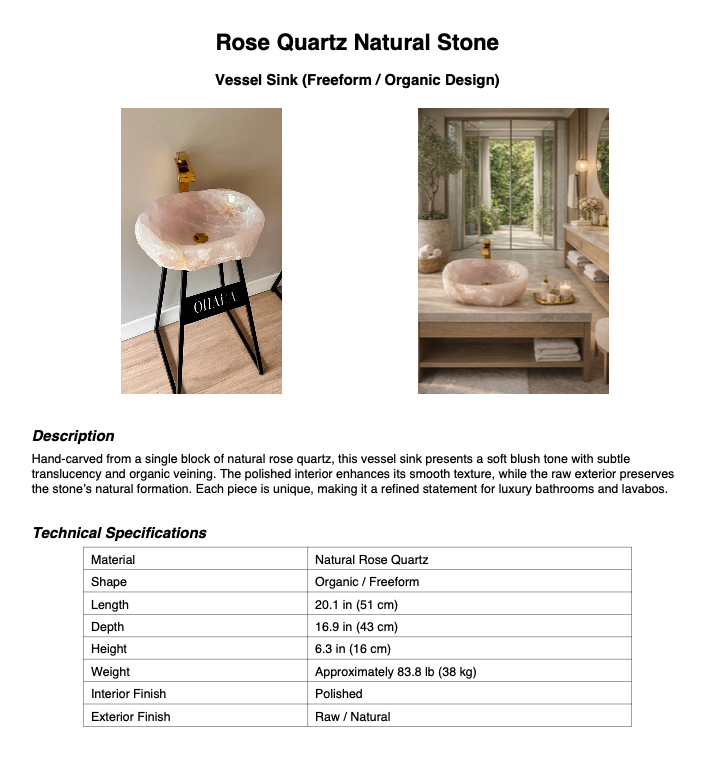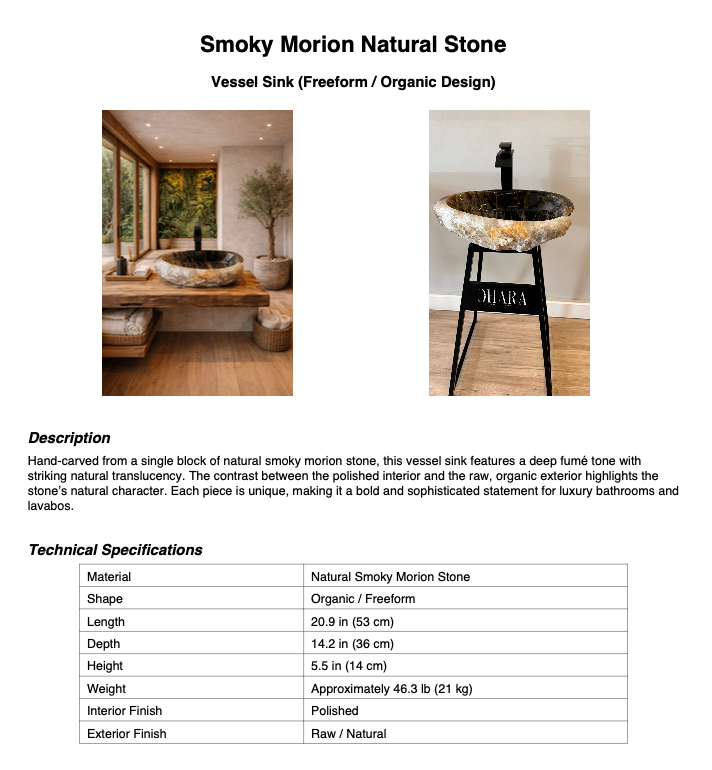
There is a difference between a crystal and a crystal object worth keeping. One fills a shelf. The other becomes the reason a room is remembered.
The distinction isn't size or price. It's not even rarity in the geological sense, though that's part of it. The objects worth keeping carry something that can't be replicated by factory production or surface treatment — a combination of natural formation, material integrity, and the hand that shaped them.
At Lumera, we deal exclusively in objects that meet this standard. Here's how we think about it, so you can apply the same lens to anything you're considering.
1. Geological Age and Formation Conditions
Most commercial crystal products come from deposits formed within the last few hundred million years. The pieces we work with come from formations that took tens to hundreds of millions of years to develop the crystal structures they have — long enough for the lattice to grow without interruption, creating the internal clarity and external form that distinguishes fine material from the generic.
The conditions that produce these pieces are not repeatable. There won't be another wave of crystals forming under the same pressure and mineral composition for a very long time. The pieces in our collection exist now because those conditions happened; they won't be replicated.
The piece you're considering existed before any civilization you're aware of. That's not poetry — it's geology.
2. Structural Integrity and Material Purity
Look at the crystal in good light. You're assessing two things: internal structure and surface integrity.
Internal structure determines how the crystal plays with light — whether it scatters it, concentrates it, or lets it pass cleanly. Fine natural quartz, for example, has a clarity that engineered stone can't replicate, because the formation process inside the earth produces a different molecular arrangement than industrial pressing or casting.
Surface integrity is about whether the material is what it appears to be. Treatments exist — dyes, coatings, resin fills — that can make low-grade material look acceptable in photos. In person, under natural light, these treatments show. A crystal object worth keeping is what it looks like. No surprises.
3. The Work of Shaping
Raw crystal is interesting. A crystal object worth keeping has been shaped with intent. The cut, the polish, the form — these represent decisions made by someone who understood the material well enough to work with it rather than against it.
For functional pieces — bowls, sinks, vessels — the shaping work is often the most significant part of the object's value. Getting quartz to hold a specific functional form without fracturing requires skill and patience. A large, clean, well-proportioned quartz bowl is genuinely difficult to produce; that's why the ones that exist are genuinely uncommon.
For sculptural pieces, the question is whether the shaper understood the crystal's natural tendencies and worked with them. A piece that's been forced into a shape it doesn't want to hold will look stressed. A piece that flows from the crystal's own geometry will look inevitable.
4. Unrepeatability
This is the hardest criterion to articulate but the easiest to feel. An object worth keeping is unrepeatable. Not "limited edition" — actually unrepeatable.
When you hold the piece, there should be no doubt that this exact configuration of material, form, and quality exists in this form and nowhere else. The crystal's natural color variation, the specific way the light enters the stone at this angle, the particular proportions the shaping produced — none of these can be precisely matched by any subsequent production run, because the starting material is inherently unique.
This is different from scarcity as a marketing concept. It's a physical fact about how natural formation works. Every crystal formed under different conditions; no two are identical. The question is whether the one you're considering is rare enough, and good enough, that that fact actually matters.
5. Where It Lives — Functional Art
Objects worth keeping tend to be used rather than displayed. A crystal bowl that holds fruit looks different every day as the light changes and the fruit changes. A crystal sink sees the light differently in the morning than at noon. The object participates in daily life while remaining itself.
This is the difference between a crystal object and a crystal art piece. Both can be worth keeping. But the objects that are used daily accumulate a different kind of meaning over time — the kind that makes someone say "I can't imagine not having this" rather than "it matches the room."
At Lumera, we think about this when we source. We ask: does this piece invite use? Does it reward daily engagement? Does it become more itself over time rather than fading as a decorative element? The pieces that answer yes to all three are the ones worth keeping.
The Standard, Not the Price
None of the above is about price range. You can find objects that meet these criteria at different price points, depending on size, material, and shaping complexity. What the criteria determine is not cost but worth — the difference between an object that holds value and one that merely carries a price tag.
The objects in our collection are priced accordingly, and we don't pretend otherwise. But we also believe that understanding the difference between a crystal and an object worth keeping changes how you shop — and that once you see the difference clearly, it's difficult to go back to anything else.
If you're looking for guidance on which pieces in our collection meet this standard, browse the collection or write to us directly. We're happy to talk through what makes a specific piece worth considering.